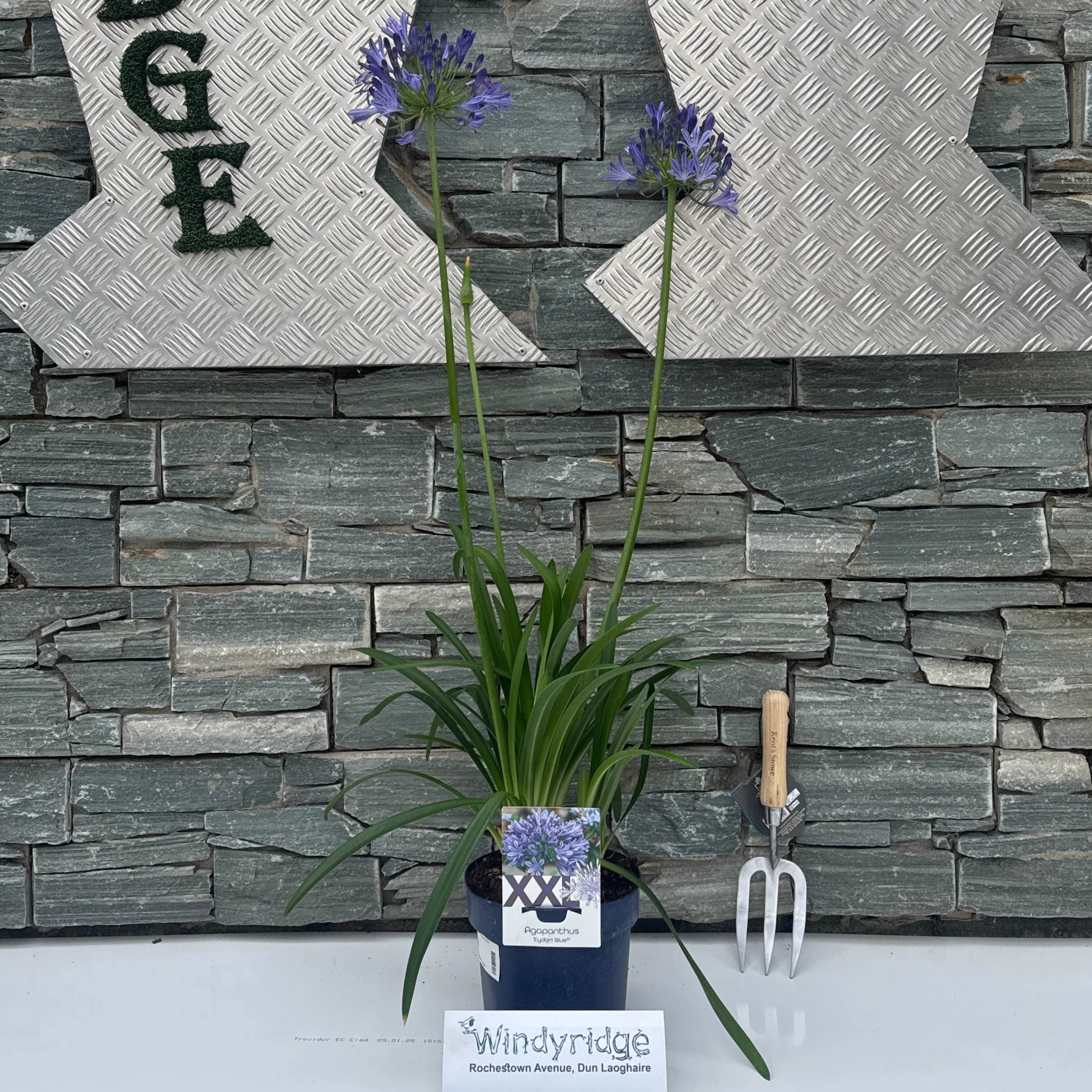
Agapanthus africanus 3 Ltr pot
Agapanthus africanus, commonly known as African lily or Lily of the Nile, is a herbaceous perennial plant native to South Africa. In the Irish climate, it is an attractive and versatile plant choice for gardens.
Height/Spread: Agapanthus africanus typically reaches a height of 1 to 1.5 meters (3 to 5 feet) with a spread of about 0.5 to 1 meter (1.5 to 3 feet).
Position: This plant thrives in a sunny or partially shaded position in the garden. It can tolerate some light shade but performs best in full sunlight.
Soil: Agapanthus africanus prefers well-draining soil that is rich in organic matter. It can tolerate a range of soil types, including loam, sandy, or clay soils. However, it is important to avoid waterlogged conditions, as it can lead to root rot.
Flowering Season: In the Irish climate, Agapanthus africanus typically blooms from mid to late summer, usually in July or August. The plant produces stunning clusters of blue or white trumpet-shaped flowers atop tall, sturdy stems.
Uses: Agapanthus africanus is commonly used as an ornamental plant in gardens and landscapes. It adds a touch of elegance and color to borders, beds, or containers. The long-lasting flowers make it a popular choice for cut flower arrangements as well. Additionally, this plant attracts pollinators like bees and butterflies, contributing to the biodiversity of the garden.
Product Information
Product Information
Shipping & Returns
Shipping & Returns

Agapanthus africanus 3 Ltr pot
Agapanthus africanus 3 Ltr pot
Agapanthus africanus, commonly known as African lily or Lily of the Nile, is a herbaceous perennial plant native to South Africa. In the Irish climate, it is an attractive and versatile plant choice for gardens.
Height/Spread: Agapanthus africanus typically reaches a height of 1 to 1.5 meters (3 to 5 feet) with a spread of about 0.5 to 1 meter (1.5 to 3 feet).
Position: This plant thrives in a sunny or partially shaded position in the garden. It can tolerate some light shade but performs best in full sunlight.
Soil: Agapanthus africanus prefers well-draining soil that is rich in organic matter. It can tolerate a range of soil types, including loam, sandy, or clay soils. However, it is important to avoid waterlogged conditions, as it can lead to root rot.
Flowering Season: In the Irish climate, Agapanthus africanus typically blooms from mid to late summer, usually in July or August. The plant produces stunning clusters of blue or white trumpet-shaped flowers atop tall, sturdy stems.
Uses: Agapanthus africanus is commonly used as an ornamental plant in gardens and landscapes. It adds a touch of elegance and color to borders, beds, or containers. The long-lasting flowers make it a popular choice for cut flower arrangements as well. Additionally, this plant attracts pollinators like bees and butterflies, contributing to the biodiversity of the garden.
Original: $25.64
-65%$25.64
$8.97Product Information
Product Information
Shipping & Returns
Shipping & Returns
Description
Agapanthus africanus, commonly known as African lily or Lily of the Nile, is a herbaceous perennial plant native to South Africa. In the Irish climate, it is an attractive and versatile plant choice for gardens.
Height/Spread: Agapanthus africanus typically reaches a height of 1 to 1.5 meters (3 to 5 feet) with a spread of about 0.5 to 1 meter (1.5 to 3 feet).
Position: This plant thrives in a sunny or partially shaded position in the garden. It can tolerate some light shade but performs best in full sunlight.
Soil: Agapanthus africanus prefers well-draining soil that is rich in organic matter. It can tolerate a range of soil types, including loam, sandy, or clay soils. However, it is important to avoid waterlogged conditions, as it can lead to root rot.
Flowering Season: In the Irish climate, Agapanthus africanus typically blooms from mid to late summer, usually in July or August. The plant produces stunning clusters of blue or white trumpet-shaped flowers atop tall, sturdy stems.
Uses: Agapanthus africanus is commonly used as an ornamental plant in gardens and landscapes. It adds a touch of elegance and color to borders, beds, or containers. The long-lasting flowers make it a popular choice for cut flower arrangements as well. Additionally, this plant attracts pollinators like bees and butterflies, contributing to the biodiversity of the garden.