Rhipsalis bur. Coral Nature P10.5
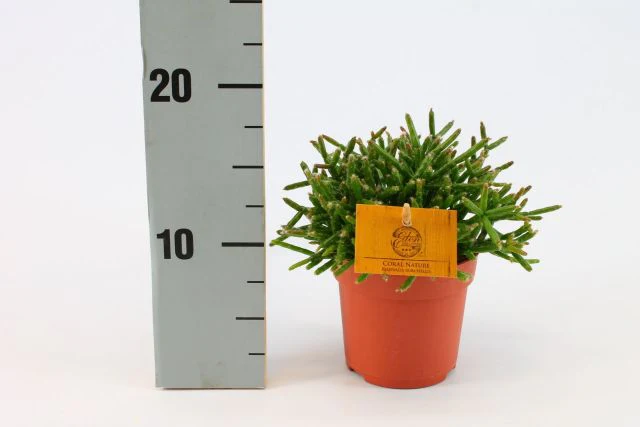
Rhipsalis is a unique and intriguing genus of succulent plants, commonly known as "mistletoe cacti." They are well-suited for the Irish climate and are sought after by gardeners for their distinctive appearance and low maintenance requirements.
Height/Spread: Rhipsalis plants vary in size and form, but most species have a trailing or cascading growth habit. They can reach heights ranging from a few inches to several feet, with a spread that can extend horizontally.
Position: Rhipsalis thrives in bright, indirect light, making it an ideal choice for Irish gardens. It is best positioned in areas that receive partial to dappled sunlight throughout the day, such as near a window or in a sheltered outdoor space.
Soil: Rhipsalis prefers well-draining soil that replicates its natural habitat. In the Irish climate, a mixture of peat moss, sand, and perlite can provide the ideal growing medium. This blend ensures proper drainage and prevents waterlogging, which can be detrimental to the plant's health.
Flowering Season: Rhipsalis species typically bloom in spring or early summer, producing small, inconspicuous flowers. While the flowers may not be the main attraction, they add a delicate touch to the plant's overall appearance.
Uses: Rhipsalis is highly versatile and can be utilized in various ways in Irish gardens. It is an excellent choice for hanging baskets, as its trailing stems create an elegant and eye-catching display. Additionally, Rhipsalis can be incorporated into mixed succulent arrangements, rock gardens, or used as a unique ground cover. Its adaptability and resilience make it an appealing option for both indoor and outdoor gardening enthusiasts in the Irish climate.
Height/Spread: Rhipsalis plants vary in size and form, but most species have a trailing or cascading growth habit. They can reach heights ranging from a few inches to several feet, with a spread that can extend horizontally.
Position: Rhipsalis thrives in bright, indirect light, making it an ideal choice for Irish gardens. It is best positioned in areas that receive partial to dappled sunlight throughout the day, such as near a window or in a sheltered outdoor space.
Soil: Rhipsalis prefers well-draining soil that replicates its natural habitat. In the Irish climate, a mixture of peat moss, sand, and perlite can provide the ideal growing medium. This blend ensures proper drainage and prevents waterlogging, which can be detrimental to the plant's health.
Flowering Season: Rhipsalis species typically bloom in spring or early summer, producing small, inconspicuous flowers. While the flowers may not be the main attraction, they add a delicate touch to the plant's overall appearance.
Uses: Rhipsalis is highly versatile and can be utilized in various ways in Irish gardens. It is an excellent choice for hanging baskets, as its trailing stems create an elegant and eye-catching display. Additionally, Rhipsalis can be incorporated into mixed succulent arrangements, rock gardens, or used as a unique ground cover. Its adaptability and resilience make it an appealing option for both indoor and outdoor gardening enthusiasts in the Irish climate.
Product Information
Product Information
Shipping & Returns
Shipping & Returns
Rhipsalis bur. Coral Nature P10.5
Rhipsalis bur. Coral Nature P10.5
Rhipsalis is a unique and intriguing genus of succulent plants, commonly known as "mistletoe cacti." They are well-suited for the Irish climate and are sought after by gardeners for their distinctive appearance and low maintenance requirements.
Height/Spread: Rhipsalis plants vary in size and form, but most species have a trailing or cascading growth habit. They can reach heights ranging from a few inches to several feet, with a spread that can extend horizontally.
Position: Rhipsalis thrives in bright, indirect light, making it an ideal choice for Irish gardens. It is best positioned in areas that receive partial to dappled sunlight throughout the day, such as near a window or in a sheltered outdoor space.
Soil: Rhipsalis prefers well-draining soil that replicates its natural habitat. In the Irish climate, a mixture of peat moss, sand, and perlite can provide the ideal growing medium. This blend ensures proper drainage and prevents waterlogging, which can be detrimental to the plant's health.
Flowering Season: Rhipsalis species typically bloom in spring or early summer, producing small, inconspicuous flowers. While the flowers may not be the main attraction, they add a delicate touch to the plant's overall appearance.
Uses: Rhipsalis is highly versatile and can be utilized in various ways in Irish gardens. It is an excellent choice for hanging baskets, as its trailing stems create an elegant and eye-catching display. Additionally, Rhipsalis can be incorporated into mixed succulent arrangements, rock gardens, or used as a unique ground cover. Its adaptability and resilience make it an appealing option for both indoor and outdoor gardening enthusiasts in the Irish climate.
Height/Spread: Rhipsalis plants vary in size and form, but most species have a trailing or cascading growth habit. They can reach heights ranging from a few inches to several feet, with a spread that can extend horizontally.
Position: Rhipsalis thrives in bright, indirect light, making it an ideal choice for Irish gardens. It is best positioned in areas that receive partial to dappled sunlight throughout the day, such as near a window or in a sheltered outdoor space.
Soil: Rhipsalis prefers well-draining soil that replicates its natural habitat. In the Irish climate, a mixture of peat moss, sand, and perlite can provide the ideal growing medium. This blend ensures proper drainage and prevents waterlogging, which can be detrimental to the plant's health.
Flowering Season: Rhipsalis species typically bloom in spring or early summer, producing small, inconspicuous flowers. While the flowers may not be the main attraction, they add a delicate touch to the plant's overall appearance.
Uses: Rhipsalis is highly versatile and can be utilized in various ways in Irish gardens. It is an excellent choice for hanging baskets, as its trailing stems create an elegant and eye-catching display. Additionally, Rhipsalis can be incorporated into mixed succulent arrangements, rock gardens, or used as a unique ground cover. Its adaptability and resilience make it an appealing option for both indoor and outdoor gardening enthusiasts in the Irish climate.
$8.12
Rhipsalis bur. Coral Nature P10.5—
$8.12
Product Information
Product Information
Shipping & Returns
Shipping & Returns
Description
Rhipsalis is a unique and intriguing genus of succulent plants, commonly known as "mistletoe cacti." They are well-suited for the Irish climate and are sought after by gardeners for their distinctive appearance and low maintenance requirements.
Height/Spread: Rhipsalis plants vary in size and form, but most species have a trailing or cascading growth habit. They can reach heights ranging from a few inches to several feet, with a spread that can extend horizontally.
Position: Rhipsalis thrives in bright, indirect light, making it an ideal choice for Irish gardens. It is best positioned in areas that receive partial to dappled sunlight throughout the day, such as near a window or in a sheltered outdoor space.
Soil: Rhipsalis prefers well-draining soil that replicates its natural habitat. In the Irish climate, a mixture of peat moss, sand, and perlite can provide the ideal growing medium. This blend ensures proper drainage and prevents waterlogging, which can be detrimental to the plant's health.
Flowering Season: Rhipsalis species typically bloom in spring or early summer, producing small, inconspicuous flowers. While the flowers may not be the main attraction, they add a delicate touch to the plant's overall appearance.
Uses: Rhipsalis is highly versatile and can be utilized in various ways in Irish gardens. It is an excellent choice for hanging baskets, as its trailing stems create an elegant and eye-catching display. Additionally, Rhipsalis can be incorporated into mixed succulent arrangements, rock gardens, or used as a unique ground cover. Its adaptability and resilience make it an appealing option for both indoor and outdoor gardening enthusiasts in the Irish climate.
Height/Spread: Rhipsalis plants vary in size and form, but most species have a trailing or cascading growth habit. They can reach heights ranging from a few inches to several feet, with a spread that can extend horizontally.
Position: Rhipsalis thrives in bright, indirect light, making it an ideal choice for Irish gardens. It is best positioned in areas that receive partial to dappled sunlight throughout the day, such as near a window or in a sheltered outdoor space.
Soil: Rhipsalis prefers well-draining soil that replicates its natural habitat. In the Irish climate, a mixture of peat moss, sand, and perlite can provide the ideal growing medium. This blend ensures proper drainage and prevents waterlogging, which can be detrimental to the plant's health.
Flowering Season: Rhipsalis species typically bloom in spring or early summer, producing small, inconspicuous flowers. While the flowers may not be the main attraction, they add a delicate touch to the plant's overall appearance.
Uses: Rhipsalis is highly versatile and can be utilized in various ways in Irish gardens. It is an excellent choice for hanging baskets, as its trailing stems create an elegant and eye-catching display. Additionally, Rhipsalis can be incorporated into mixed succulent arrangements, rock gardens, or used as a unique ground cover. Its adaptability and resilience make it an appealing option for both indoor and outdoor gardening enthusiasts in the Irish climate.