Ceanothus thyrs. repens
Ceanothus thyrsiflorus var. repens - Creeping Blue Blossom
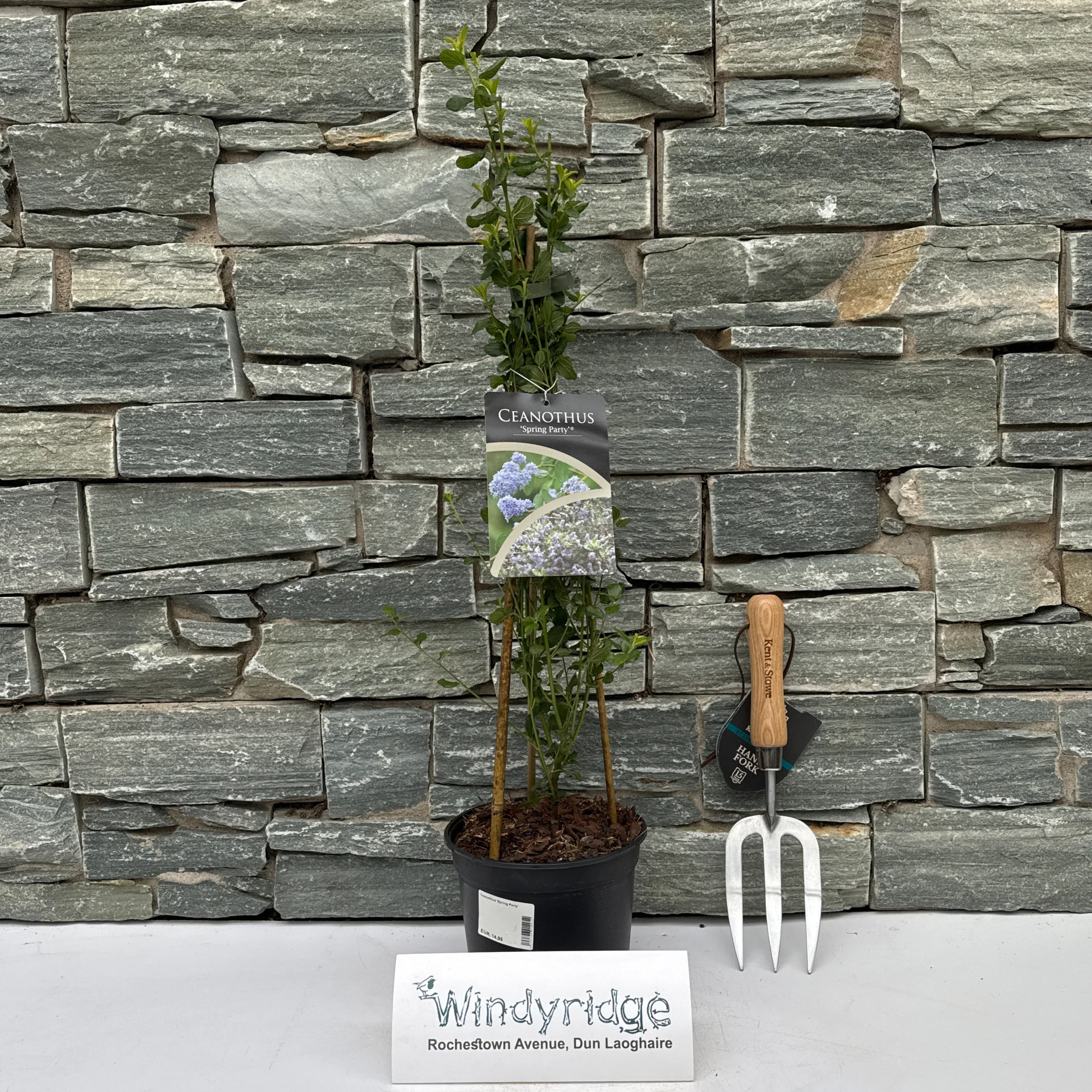
Potted Ceanothus thyrsiflorus var. repens
Common Name: Creeping Blue Blossom
Other names: None
Indoors or Outdoor: Outdoor
Size: Ultimate height: 0.5–1 meters, Ultimate spread: 2.5–4 meters
Ceanothus thyrsiflorus var. repens - Delivery
Delivery info: Nationwide delivery available
Ceanothus thyrsiflorus var. repens - Characteristics
Mature Size: Vigorous evergreen shrub about 90cm tall and 2.5m wide, with a spreading habit, but much taller when grown against a wall.
Evergreen or deciduous: Evergreen
Preferred Position: Full sun, South-facing or West-facing aspect, sheltered exposure
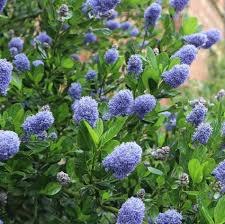
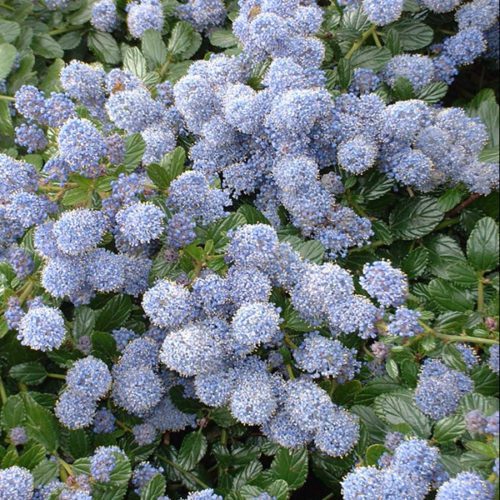
Shape - Plant Characteristics: Arching branches bear glossy mid-green leaves to 4cm long. Masses of light blue flowers, in compact panicles are produced in spring.
Hardy or not Hardy: Hardy (H4)
Diseases: May be susceptible to honey fungus
Ceanothus thyrsiflorus var. repens - Uses
Uses in Garden: Ideal for city and courtyard gardens, coastal areas, cottage and informal gardens, Mediterranean climate gardens, wildlife gardens, wall-side borders, flower borders and beds, and ground cover.
Ceanothus thyrsiflorus var. repens - Characteristics
Preferred planting aspect: Full sun, sheltered from cold winds
Frost Hardy: Yes (Hardiness rating: H4)
Fast or slow Growing: Fast-growing but may be short-lived
Pruning advice: Pruning group 8 after flowering
Ceanothus thyrsiflorus var. repens - Planting Instructions in an Irish climate
Planting Time: Mid to late summer
Trench Preparation: Ensure fertile, well-drained soil
Positioning of Plants: Full sun, sheltered from strong, cold winds
Plant Spacing: Allow ample space for ultimate spread (2.5–4 meters)
Pruning: Prune in group 8 after flowering
Facts About Products:
Provides nectar and pollen for bees and other pollinating insectsTolerant of lime but may become chlorotic on shallow chalk soils
Propagate by semi-ripe cuttings in mid to late summer
May be susceptible to scale insects and honey fungus
For more information on cultivation and care, refer to RHS guidelines.
Product Information
Product Information
Shipping & Returns
Shipping & Returns



Ceanothus thyrs. repens
Ceanothus thyrs. repens
Ceanothus thyrsiflorus var. repens - Creeping Blue Blossom
Potted Ceanothus thyrsiflorus var. repens
Common Name: Creeping Blue Blossom
Other names: None
Indoors or Outdoor: Outdoor
Size: Ultimate height: 0.5–1 meters, Ultimate spread: 2.5–4 meters
Ceanothus thyrsiflorus var. repens - Delivery
Delivery info: Nationwide delivery available
Ceanothus thyrsiflorus var. repens - Characteristics
Mature Size: Vigorous evergreen shrub about 90cm tall and 2.5m wide, with a spreading habit, but much taller when grown against a wall.
Evergreen or deciduous: Evergreen
Preferred Position: Full sun, South-facing or West-facing aspect, sheltered exposure
Shape - Plant Characteristics: Arching branches bear glossy mid-green leaves to 4cm long. Masses of light blue flowers, in compact panicles are produced in spring.
Hardy or not Hardy: Hardy (H4)
Diseases: May be susceptible to honey fungus
Ceanothus thyrsiflorus var. repens - Uses
Uses in Garden: Ideal for city and courtyard gardens, coastal areas, cottage and informal gardens, Mediterranean climate gardens, wildlife gardens, wall-side borders, flower borders and beds, and ground cover.
Ceanothus thyrsiflorus var. repens - Characteristics
Preferred planting aspect: Full sun, sheltered from cold winds
Frost Hardy: Yes (Hardiness rating: H4)
Fast or slow Growing: Fast-growing but may be short-lived
Pruning advice: Pruning group 8 after flowering
Ceanothus thyrsiflorus var. repens - Planting Instructions in an Irish climate
Planting Time: Mid to late summer
Trench Preparation: Ensure fertile, well-drained soil
Positioning of Plants: Full sun, sheltered from strong, cold winds
Plant Spacing: Allow ample space for ultimate spread (2.5–4 meters)
Pruning: Prune in group 8 after flowering
Facts About Products:
Provides nectar and pollen for bees and other pollinating insectsTolerant of lime but may become chlorotic on shallow chalk soils
Propagate by semi-ripe cuttings in mid to late summer
May be susceptible to scale insects and honey fungus
For more information on cultivation and care, refer to RHS guidelines.
Product Information
Product Information
Shipping & Returns
Shipping & Returns
Description
Ceanothus thyrsiflorus var. repens - Creeping Blue Blossom
Potted Ceanothus thyrsiflorus var. repens
Common Name: Creeping Blue Blossom
Other names: None
Indoors or Outdoor: Outdoor
Size: Ultimate height: 0.5–1 meters, Ultimate spread: 2.5–4 meters
Ceanothus thyrsiflorus var. repens - Delivery
Delivery info: Nationwide delivery available
Ceanothus thyrsiflorus var. repens - Characteristics
Mature Size: Vigorous evergreen shrub about 90cm tall and 2.5m wide, with a spreading habit, but much taller when grown against a wall.
Evergreen or deciduous: Evergreen
Preferred Position: Full sun, South-facing or West-facing aspect, sheltered exposure
Shape - Plant Characteristics: Arching branches bear glossy mid-green leaves to 4cm long. Masses of light blue flowers, in compact panicles are produced in spring.
Hardy or not Hardy: Hardy (H4)
Diseases: May be susceptible to honey fungus
Ceanothus thyrsiflorus var. repens - Uses
Uses in Garden: Ideal for city and courtyard gardens, coastal areas, cottage and informal gardens, Mediterranean climate gardens, wildlife gardens, wall-side borders, flower borders and beds, and ground cover.
Ceanothus thyrsiflorus var. repens - Characteristics
Preferred planting aspect: Full sun, sheltered from cold winds
Frost Hardy: Yes (Hardiness rating: H4)
Fast or slow Growing: Fast-growing but may be short-lived
Pruning advice: Pruning group 8 after flowering
Ceanothus thyrsiflorus var. repens - Planting Instructions in an Irish climate
Planting Time: Mid to late summer
Trench Preparation: Ensure fertile, well-drained soil
Positioning of Plants: Full sun, sheltered from strong, cold winds
Plant Spacing: Allow ample space for ultimate spread (2.5–4 meters)
Pruning: Prune in group 8 after flowering
Facts About Products:
Provides nectar and pollen for bees and other pollinating insectsTolerant of lime but may become chlorotic on shallow chalk soils
Propagate by semi-ripe cuttings in mid to late summer
May be susceptible to scale insects and honey fungus
For more information on cultivation and care, refer to RHS guidelines.